

Route sales and vehicle sales
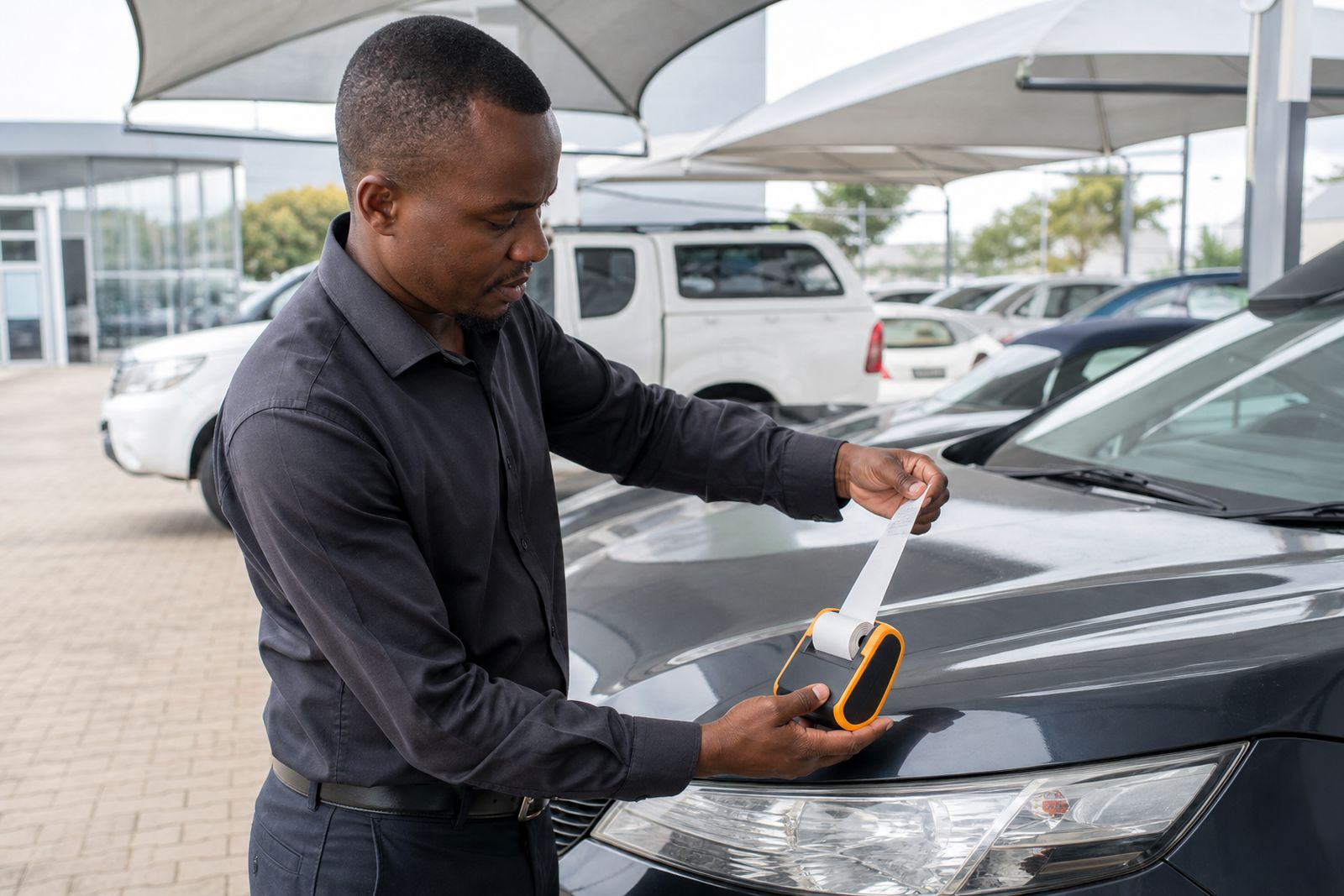
When the sale happens next to the vehicle, a printed quote or receipt closes the gap between agreement and payment. For route sellers and vehicle sales teams in South Africa, a mobile printer helps keep paperwork clear, fast and professional at the customer.
Why on-site printing still matters
In route sales and vehicle sales, timing counts. A customer may be standing at a shop counter, in a yard, or next to a bakkie ready to approve the deal. If the rep can print a clear quote or receipt there and then, the customer leaves with proof in hand and the rep moves on to the next stop with less admin waiting later.
Printed slips are still useful even when a copy is sent to a phone. Many customers want something they can file straight away, especially for petty cash, stock received, deposits, trade-ins or workshop-related vehicle sales. A thermal mobile printer is a simple fit for this kind of work because it starts quickly, has few moving parts and works well in a vehicle-based routine.
For South African teams, that matters during load-shedding and after-hours trading too. If the handheld device or phone is charged and the printer battery is ready, the team can keep issuing paperwork without needing mains power at the branch.
Route sales jobs that benefit most
Route sales usually means many short stops, repeated transactions and pressure to move quickly without making mistakes. In that environment, a printer should be easy to pair, easy to load and small enough to carry or mount in the cab.
- Route sellers delivering stock who need to print a receipt after payment or a delivery note for signed confirmation.
- Field sales reps who leave a written quote at the customer after checking quantities on site.
- Drivers collecting COD payments who must hand over immediate proof of payment.
- Parts and consumables sellers visiting workshops, fitment centres and stores across industrial areas.
- Vehicle sales staff handling deposits, accessories, valuation paperwork or trade-in confirmations away from a fixed counter.
In each case, the printed document reduces later disputes about quantity, amount, date or who accepted the goods. It also helps when mobile signal is poor and the customer does not want to rely only on a message arriving later.
What vehicle sales teams need from a mobile printer
Vehicle sales work is slightly different from route delivery. The paperwork often includes deposits, optional extras, service plan add-ons, accessories and pre-owned handover items. The amount of text can be longer, so paper width matters. A narrow format may suit a quick payment receipt, while a wider roll gives better legibility for line items and terms.
Teams working from dealer yards, shopping centre activations or off-site display areas usually ask for a printer that can connect to a phone or handheld device by Bluetooth, then charge in the vehicle between appointments. If the printer will be used outdoors, a carry case and belt clip help avoid drops when moving around parked vehicles.
- Choose a paper width that matches the amount of detail on the document.
- Check that the phone or handheld device can talk to the printer properly before rollout.
- Use a vehicle charger if the printer spends full days on the road.
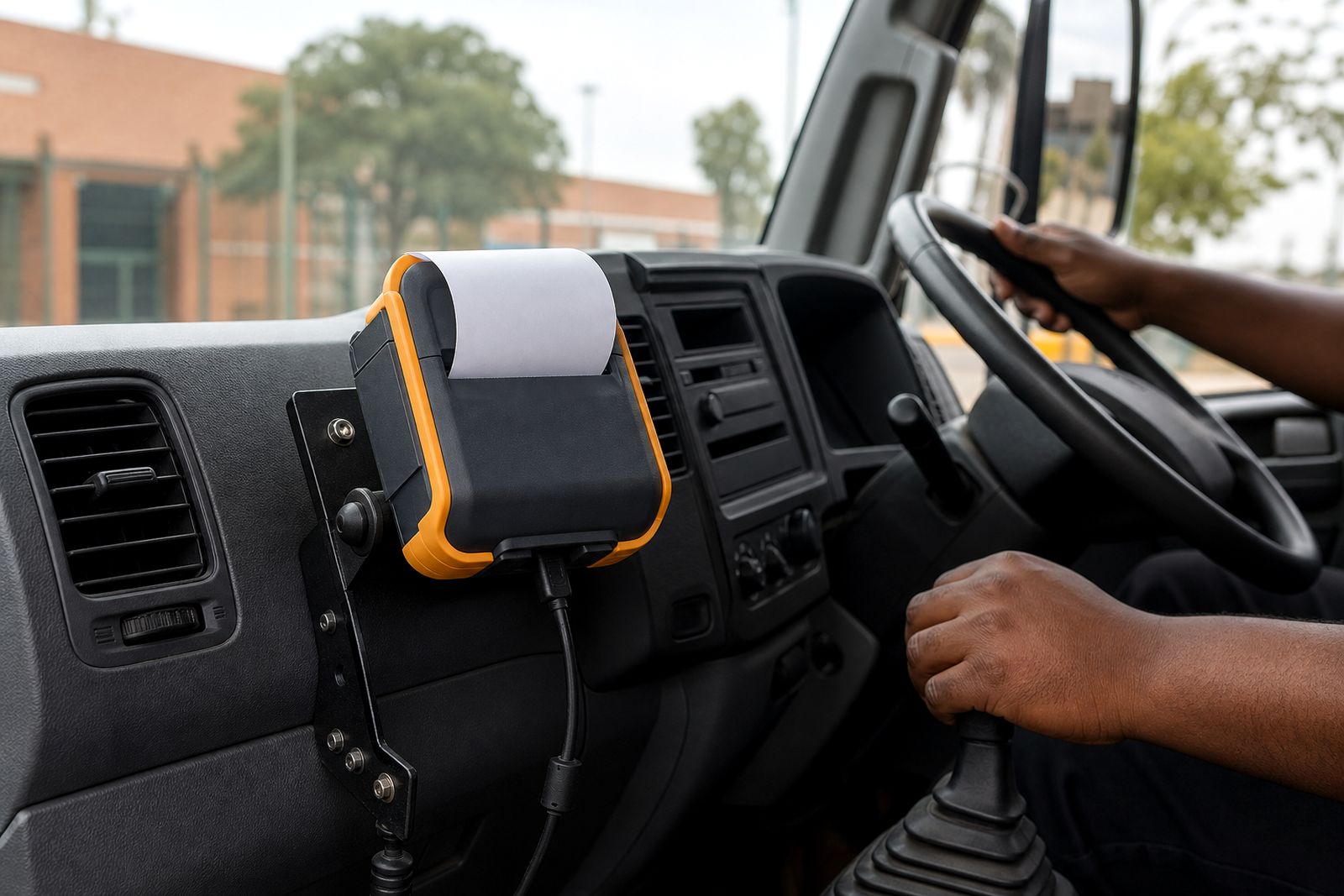
- Consider a mount when the printer stays in the cab and prints at multiple stops.
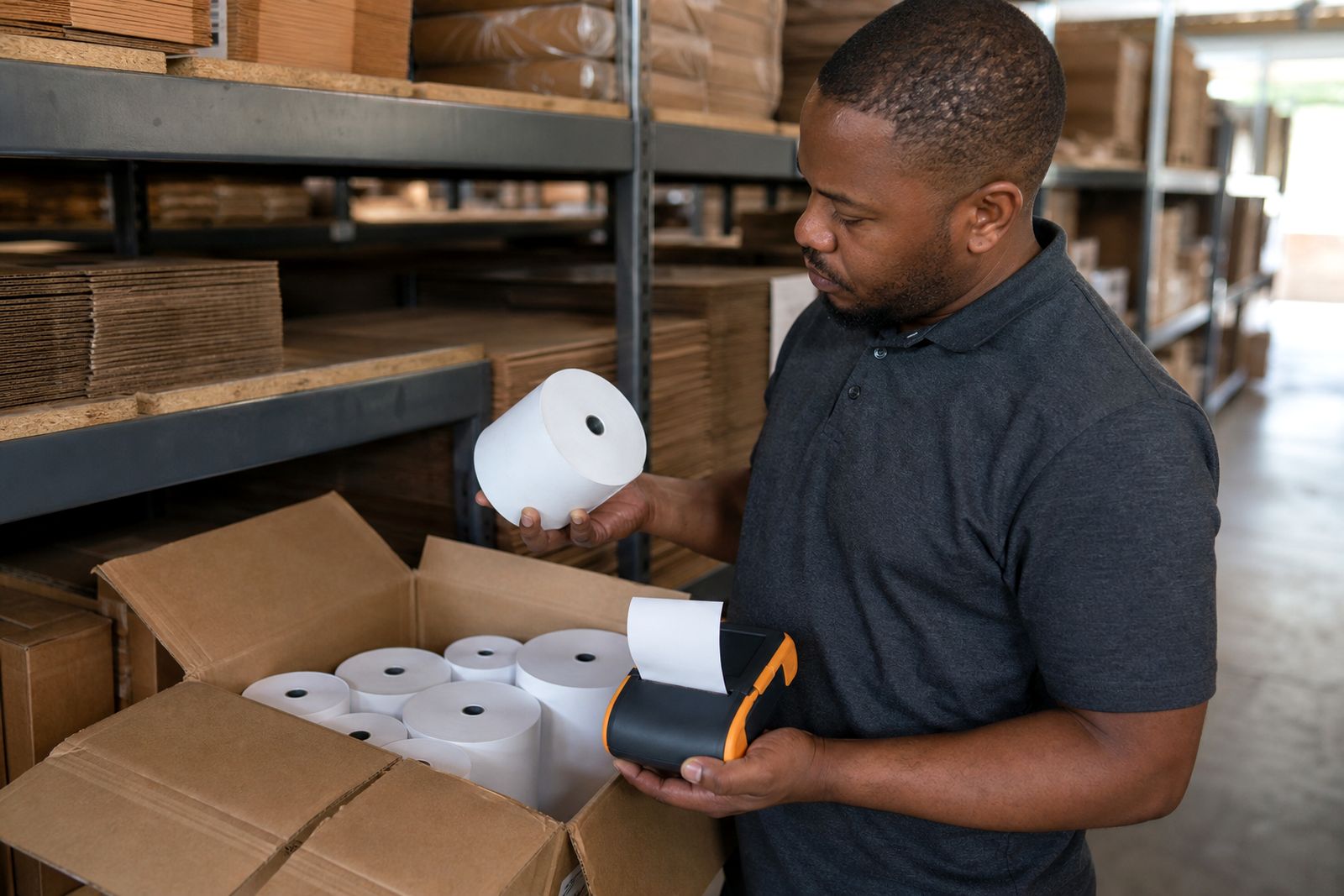
- Keep spare thermal rolls sealed and out of direct sun.
This sounds basic, but many printing problems on the road come from the wrong paper width, weak charging habits or a device pairing that was never tested under actual field conditions.
A practical workshop example from Midrand
A workshop-linked sales team in Midrand needed to issue quick printed receipts for parts sold over the counter vehicle side, plus quotations for small repair items spotted during inspections. Their staff were already using mobile devices to capture stock and customer details, but customers still asked for something printed before authorising the next step.
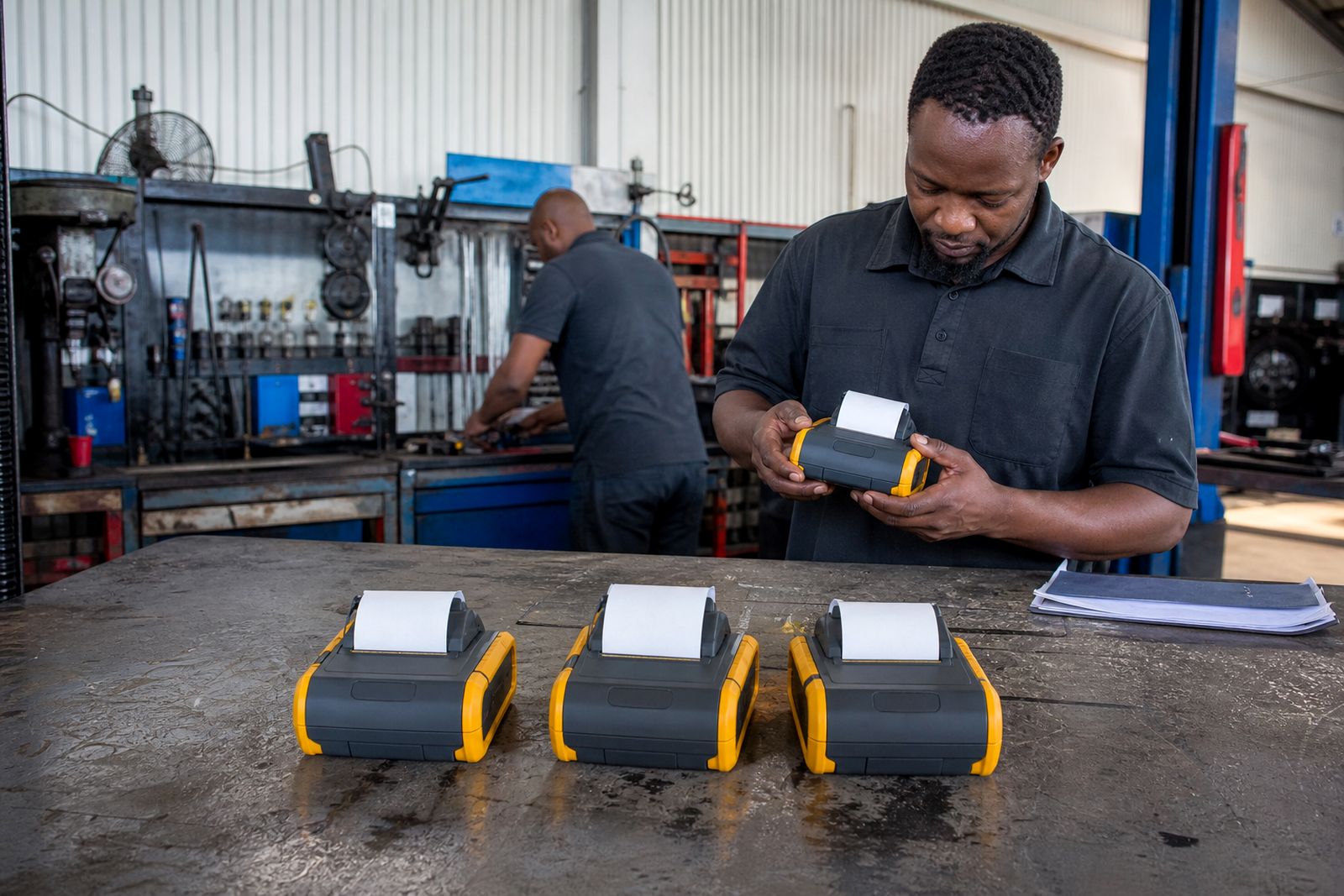
The setup that worked best was a compact thermal printer carried by the operator during yard checks and used inside the workshop reception area when needed. A vehicle charger stayed in the service vehicle, spare rolls were kept in a dry cupboard, and the paper size was chosen to fit item descriptions clearly. That avoided tiny text and cut down on reprints.
One practical lesson was storage. In Gauteng heat, and especially in vehicles parked in the sun, loose thermal rolls can darken or curl. Once they moved spare rolls into a case and kept only the active roll in the printer, print quality became more consistent. Another lesson was mounting. A loose printer sliding on a seat or floor picks up dust quickly, and dust around the paper path causes unnecessary frustration.
Common mistakes on the road
Most field printing issues are avoidable. The main problem is choosing the printer around size alone, without checking how it will be used through a full working day. A route seller has different needs from a vehicle sales rep who prints fewer but longer documents.
- Using the wrong roll width for the document layout.
- Leaving the printer uncharged until the morning run.
- Keeping thermal paper in a hot cab or damp coastal storeroom.
- Skipping a proper pairing test with the exact phone or handheld in use.
- Expecting a very small printer to cope with high-volume stop-after-stop printing.
- Not carrying spare rolls in a protective case.
Dust, vibration and rough handling also matter. Teams working on gravel roads, in industrial sites or around open workshop bays should look at carry protection and secure in-vehicle placement. Near the coast, humidity can affect stored rolls if they are left open for too long, so stock rotation helps. Small habits make a big difference here and save time later.
How to choose the right setup
Start with the document, not the printer. Ask what must be printed at the customer, how many slips per shift, how long the rep is away from a charger and whether the unit is carried on a belt, in a case or kept in the vehicle. Then confirm the connection method and paper width.
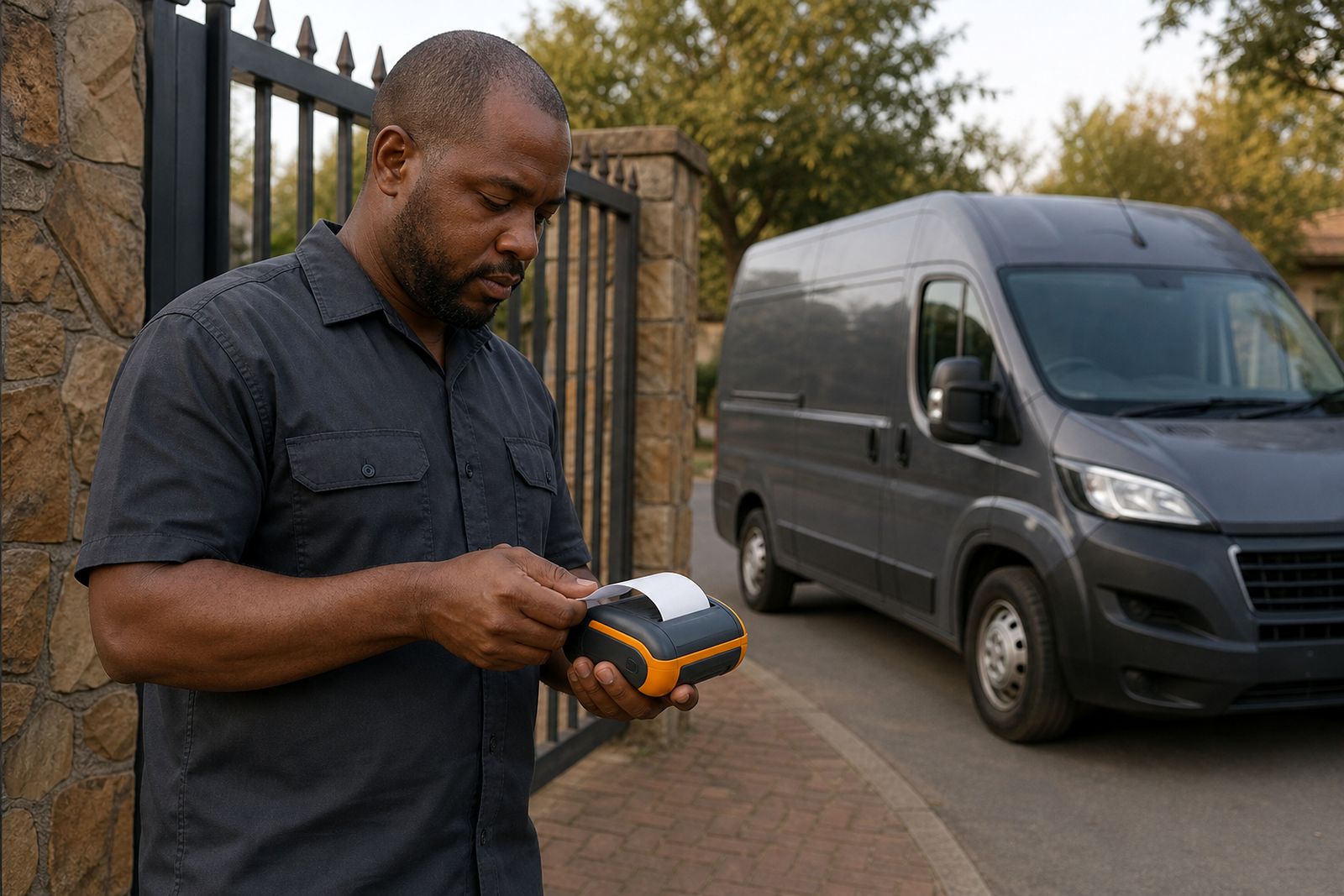
We supply mobile receipt printers for drivers, route sellers and field teams from Midrand, and we help customers match the printer to the handheld device or phone and the correct paper size. We also supply the practical extras that make daily use easier, such as belt clips, carry cases, thermal paper rolls, vehicle chargers and mounts.
If your team handles route sales or vehicle sales, the best result usually comes from testing the real workflow first. Print a quote in bright sun. Print a receipt from inside the cab. Load a fresh roll while wearing work gloves. Those small checks show very quickly whether the setup will hold up on the road, or whether a different size or accessory is the better choice.
What our Mobile Receipt Printers customers say
Verified Google reviews
Questions we get asked
What paper width is better for vehicle sales documents?
It depends on how much detail must fit on each print. Short receipts often work well on a narrower roll, while quotes or documents with more line items are usually easier to read on a wider roll.
Can a mobile printer work with a phone or handheld device?
Yes, many field setups use Bluetooth or USB, but compatibility must be checked with the exact device in use. We help customers match the printer to the phone or handheld and the paper width.
What accessories are useful for route sellers?
The most common extras are belt clips, carry cases, spare thermal rolls, vehicle chargers and in-vehicle mounts. These help with battery life, protection and quicker printing during a busy route.
Also worth a look
Tell us about the job
Send sizes, materials and where you are through our contact form, and we will come back with the practical options.
Open the contact form